SEO for Adventure Tourism: What Actually Works (With Real Results)

Many tourism businesses invest in SEO but struggle to turn visibility into real bookings. That’s because SEO for adventure tourism isn’t just about ranking, it’s about aligning your content with how travelers actually search and make decisions. By focusing on intent-driven content, destination-specific pages, and strong on-site optimization, tourism brands can turn organic traffic into a consistent source of leads. For example, our client Fit 4 Adventure increased organic traffic by 250%, grew ranking keywords by over 10%, and saw a clear lift in inquiries and bookings by applying a structured SEO strategy built around real user behavior.
Why SEO for Adventure Tourism Is Challenging
Tourism SEO is fundamentally different from many other industries. People don’t make quick decisions about travel, especially when it involves time, money, and experience. Instead, they research, compare, and revisit options before committing.
This is exactly why SEO for adventure tourism is often misunderstood.
Many businesses assume that ranking for a few keywords or publishing blog content is enough. But in reality, visibility alone doesn’t drive bookings. A page can appear in search results and still fail to generate clicks or conversions if it doesn’t match what the user is looking for.
In adventure tourism, search behavior is highly specific. Users combine destinations, activities, and expectations into a single query. At the same time, they are looking for reassurance, clarity, and trust before making a decision.
That’s why SEO for adventure tourism requires a different approach, one that focuses on intent, relevance, and conversion rather than just traffic.
Fit4Adventure Case Study: From Visibility to Bookings
To understand what actually works in adventure tourism SEO, it helps to look at a real example.
Fit 4 Adventure is an international travel company offering guided tours across Europe, the United States, and beyond. Their trips range from hiking the Dolomites to cycling Portugal’s coast, placing them in a competitive space where standing out in search is critical.
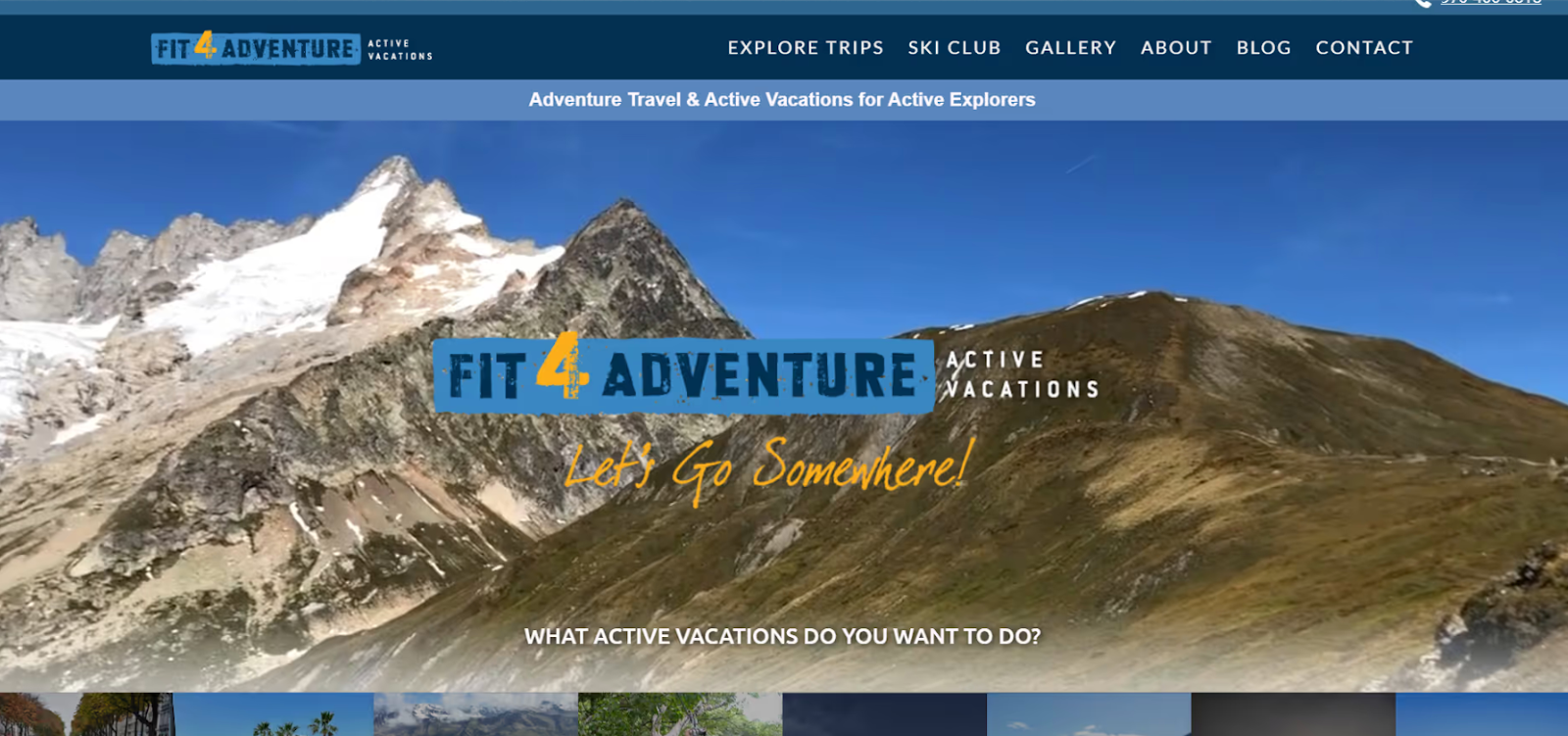
Before improving their SEO strategy, they faced a common issue. Their trips were strong, but their organic visibility was not capturing enough demand. They needed to attract more travelers searching for specific experiences while also improving how their pages performed and converted.
Their approach highlights what effective SEO for adventure tourism actually looks like.
They began by aligning keyword research with real search behavior. Instead of focusing on broad travel terms, they mapped queries to destinations, activities, and seasonal demand. This ensured their content reflected how people actually search for trips.
They then optimized more than 30 key pages across the site. This included improving titles and descriptions, refining header structure, strengthening internal links, and making the content more clear and persuasive.
To expand their reach, they created blog and landing pages targeting long-tail queries such as “guided hiking tours Italy” and “best adventure travel groups for 50+.” These types of searches tend to attract users who are closer to booking.
At the same time, technical improvements were made to support performance. Site speed was enhanced, mobile usability was improved, and crawlability issues were addressed. Structured data was also implemented to improve how pages appeared in search results, helping increase click-through rates.
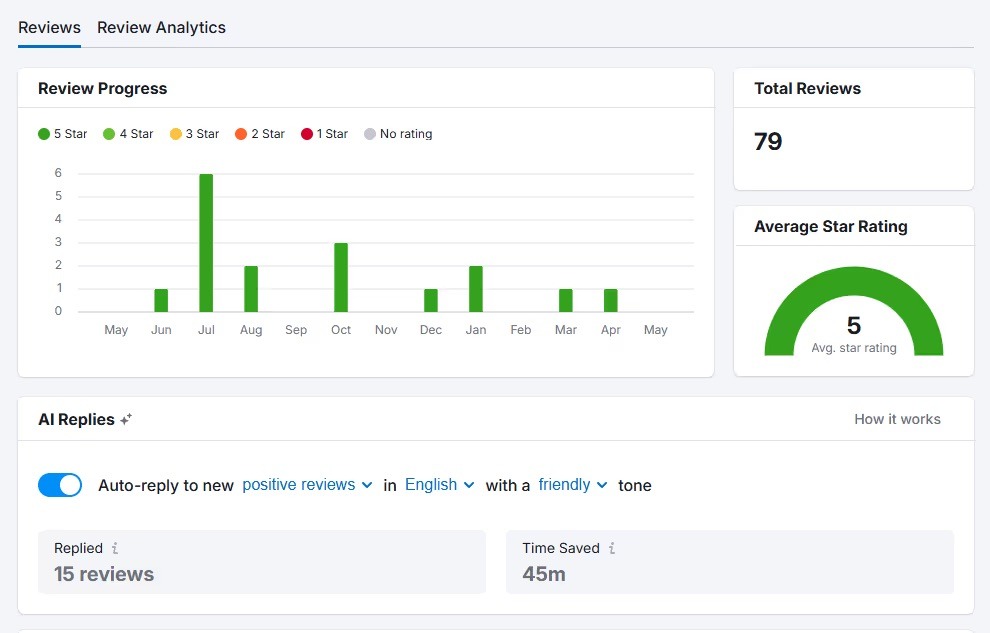
The results were significant within a few months. Organic traffic increased by 250%, and the number of ranking keywords grew by more than 10%. Several important travel terms reached page one, and there was a clear increase in inquiries and bookings tied directly to SEO.
This is what happens when SEO for adventure tourism is built around real user intent instead of generic tactics.
1. Focus on Search Intent, Not Just Keywords
One of the main reasons businesses struggle with SEO for adventure tourism is that they focus too heavily on keywords without fully understanding intent.
A keyword might bring traffic, but if the content does not match what the user expects, it will not lead to engagement or bookings.
Fit 4 Adventure’s strategy worked because their pages were designed around specific intent. Each page addressed a clear question or need, whether it was related to a destination, a type of trip, or a particular audience.
For tourism businesses, this means shifting from “what keywords should we target?” to “what is the user trying to accomplish?” That shift alone can dramatically improve both rankings and conversions.
2. Build Content Around the Booking Journey
Another reason SEO for adventure tourism can be difficult is that the customer journey is longer and more complex than in many industries.
Travelers don’t just search once and book. They move through stages, from inspiration to research to comparison before making a decision.
Your content should support that journey.
Fit 4 Adventure captured this by creating content that addressed specific needs and concerns. By targeting long-tail queries, they were able to reach users who were already considering a trip and needed help making a final decision.
This approach builds trust and reduces uncertainty, both of which are critical for conversion in the tourism space.
3. Use Destination and Activity-Based SEO
Search behavior in adventure tourism is highly detailed. People rarely search for general terms. Instead, they look for specific experiences in specific locations.
This is another area where many businesses struggle with SEO for adventure tourism. They create broad pages that do not fully match how users search.
Fit 4 Adventure structured their content around this behavior. Their pages were built to target combinations of destinations and activities, aligning directly with real search queries.
This approach captures high-intent traffic and connects users with exactly what they are looking for, making it far more effective than generic content.
4. Combine Content, Technical SEO, and User Experience
A common mistake in SEO is treating different elements as separate tasks. In reality, success comes from how they work together.
Fit 4 Adventure’s results were driven by a combination of content improvements and technical enhancements. Optimizing pages made them easier to rank, while improving site speed and mobile usability made them easier to use.
Structured data also played a role by improving how pages appeared in search results, which helped increase click-through rates.
This layered approach is essential for SEO for adventure tourism because both visibility and user experience influence whether someone ultimately books.
5. Improve Click-Through Rate to Unlock Growth
Even when a site ranks well, growth can stall if users are not clicking on the results. This is a common issue in SEO for adventure tourism, where competition is high and users have many options.
Improving click-through rate is often one of the fastest ways to increase traffic.
Small changes to titles and meta descriptions can make a significant difference. A clear, results-driven title that highlights value or outcomes is much more likely to attract attention than a generic one.
Because this builds on existing visibility, it can generate results quickly without requiring major changes to rankings.
Final Thoughts: What Actually Drives Growth
SEO for adventure tourism is not about producing more content or chasing more keywords. It is about understanding how people search, what they need to make a decision, and how to guide them toward booking.
The success of Fit4Adventure shows that when SEO is aligned with real user intent, it becomes a reliable and scalable growth channel. Traffic increases, rankings improve, and most importantly, more travelers convert into customers.
Ready to Grow Your Adventure Travel SEO?
SEO for adventure tourism is not about producing more content or chasing more keywords. It is about understanding how people search, what they need to make a decision, and how to guide them toward booking.
Fit4Adventure results show that when SEO is aligned with real user behavior, it becomes a powerful and sustainable growth channel. Traffic increases, rankings improve, and most importantly, more travelers convert into customers.
Book a discovery call with us at Jolly Web uncover the biggest opportunities for your business.


